Welcome to a brand new episode of Avian Bone Syndrome Podcast! This is a “patch” episode, tying up a few loose ends from episodes 1–3. In particular, this episode covers lunar eclipses, daguerrotypes, and the filter bubble around you on the Internet. Don’t forget to “like” the new Facebook page for Avian Bone Syndrome! Links of interest mentioned in the episode: My photos of both lunar and solar eclipses Large format photography Ansel Adams’ zone systems Eli Pariser’s TED talk about the filter bubble The Filter Bubble book: Amazon.com – Amazon.co.uk – Amazon.it
Tag: photography
Here is episode 2 of Avian Bone Syndrome Podcast! Thank you so much to everyone who listened to episode 1 and provided feedback, suggestions and ideas. This is very much a work-in-progress for me from many points of view, but it’s something I’m enjoying quite a bit. This episode is about photography and ethics: what is the line between photo editing and fraud? There are no links mentioned in the episode, however you may find these interesting: My portfolio on Flickr My Facebook page dedicated to my photography Prints of my photos for sale
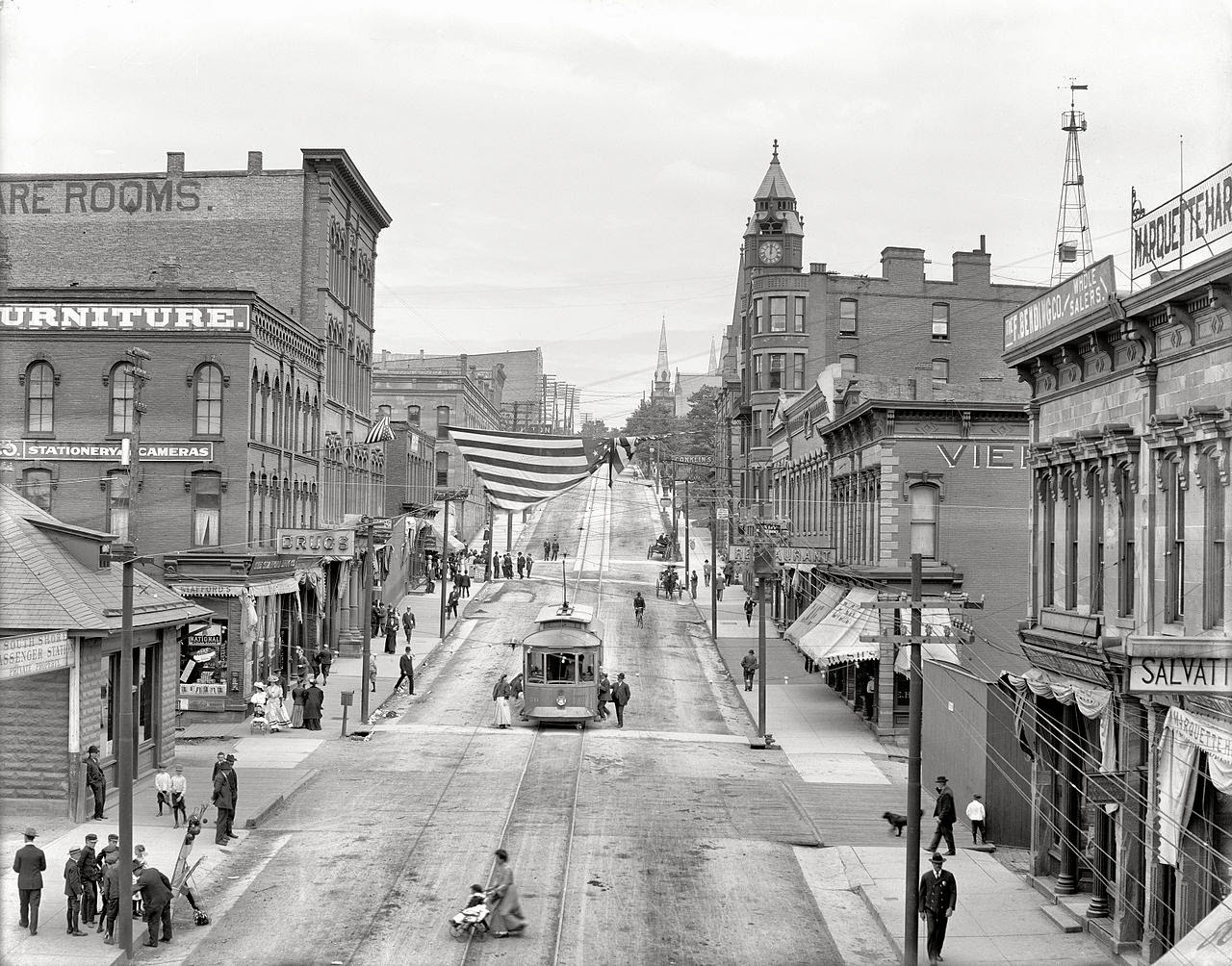
On this fine Sunday morning, I discovered a website that I’ve immediately fallen in love with. It’s called Vintage Everyday, and its tagline reads “bring back nostalgia and memories”. And it does, oh if it does, although technically it’s not even nostalgia: most of us simply don’t remember those times because we just never lived in them. Still, it’s an unbelievable collection that will keep you browsing for hours. It contains photos of times past: people dressed in the style of their time, billboards with traditional advertising, cities shaped in ways now alien. It’s mesmerizing, and in a different way from sites collecting pictures of actors and actresses from the Golden Age of Hollywood, such as the appropriately named Old Hollywood. Vintage Everyday is different because it collects images of everyday people and everyday places, not famous movie stars, and in a sense it shows the human side of history. A similar feeling can be had by browsing one’s…
What is art? According to Dictionary.com, “[art is] the quality, production, expression, or realm, according to aesthetic principles, of what is beautiful, appealing, or of more than ordinary significance.” That’s a pretty neat definition. Note the last part: “more than ordinary significance”. That means that the viewer, or listener — or more generally, the recipient of art — has to be influenced and affected by the work, for it to be defined art. If that doesn’t happen, it means that it’s not really art after all. It’s a very subjective matter, of course. For instance I personally don’t like most of Picasso’s works, but I do find his Guernica quite unsettling. It affects me, so to me it is art. Some say that you have to be “trained” before you can appreciate some kinds of art. I disagree with that: while it is true that some people may learn to “get”…
Many social networks today employ the concept of “favoriting” items: images on Flickr, Instagram and 500px; songs on SoundCloud; videos on YouTube and Vimeo; tweets on Twitter; repositories on GitHub; and so on…. When you “favorite” or “like” something, you’re essentially telling the author that you’d like more of that. Yet, when it comes to creative endeavors, it’s money that makes the difference: not only it helps cover the costs of production, but it also frees up time to produce more. That’s why many of us resort to selling prints, crowdfunding and other ways of raising money. One of such other ways is Flattr. And it’s G-R-E-A-T. The idea behind the Sweden-based company is both simple and genius: instead of actively sending money to an author, which can be complex and, in some cases, awkward, you can prepay your Flattr account using pretty much any credit card (in addition to Paypal)…
These past few weeks I’ve been thinking a lot about my photography. As many of you probably know, during the last year I’ve been cooperating with my friend, make-up artist Stefania Di Gregorio, on portraits of models in my home studio. The studio is actually a work in progress itself, as I build it piece by piece as I go. Taking photos of people is something I had wanted to do for a long time, but I never managed to convince anyone to pose for me before. My origins as a photographer, in any case, are in the field of landscapes and macrophotography. There is something about macrophotography that always fascinated and attracted me. I don’t have specific high-end equipment for that kind of images: I use basic extension tubes that allow my Sigma 18-200 zoom to focus much closer than normal. This way, I can be as a close…
Over the weekend, I had the chance to follow Phil Steele’s “How to Shoot Professional-Looking Headshots and Portraits on a Budget with Small Flashes” video course. Quite a title, I know; perhaps he’s a fan of Lina Wertmüller’s films, or something like that. You may know Phil from YouTube, he’s somewhat of a celebrity in the world of photography tutorials (and definitely one of my favorites, together with The Slanted Lens, Phillip McCordall and others. When I saw that he had a full-length video course about studio portraits with small flashed, I jumped in. Read below for more. Let me go back in time a little: as many of you probably know, I’m an amateur photographer and in 2012 I started photographing people in what I like to call my studio, which is really my laboratory, which is really a room in my house where I work and hack things.…
It is no mystery that I have a passion for photography. Having published two books and posting regularly on my Flickr stream, and knowing the theory of optics in addition to just snapping around, I think I know what I’m doing. Mind you, this does not mean I consider myself an artist. It may sound cliché, but I am strongly convinced that artist is a definition that others should cast upon you, rather that something you call yourself. In fact, despite what I am often told, I do not feel like my photography is that good. It’s not false modesty: I really don’t think so.
However, ever since the introduction of cheap compact cameras (and, god forbid, cheap reflex cameras), photography became mainstream. There is nothing inherently wrong with it – the more the merrier, right? – yet there are some trends in photography that I simply do not understand, and some that are just plain bad. Needless to say, these annoyances are most often perpetrated by hipsters or (gasp!) wannabe hipsters. Now, it has to be clarified that my concept of hipster includes not just the traditional, American-ish hipster, but more generally all those “subcultures” – trust me, quotes were never more appropriate – that strive to be alternative and ultimately fail to be unique. This includes, admittedly due to my cultural vantage point, the decadent leit-motif that seems to permeate the life of Italian teenage girls and young women. I may write specifically about this matter, as it’s not specific to photography.
So, without further ado, let me present a roundup of the most annoying trends in photography today. It goes without saying that this is merely my personal opinion.
This morning, a partial solar eclipse was visible throughout Europe. I took some pictures, and posted them. Click on the thumbnail to read more and view it in full resolution: