Skip to content

Category: Technology

An easy fix for missing exercise minutes on Apple Watch

The Apple Watch is a nice little device, and it’s known to have motivated even lazy people into taking better care of themselves through the “gamification” of exercise. However, it can happen that the Workout app doesn’t properly track exercise minutes (and, to a lesser extent, burned calories), and while Apple provides an official checklist for improving workout calibration, sometimes the issues persist. TL;DR: If you wear the Watch low on your arm, move it higher. Seriously, that fixed it for me. One very peculiar problem I had myself was that indoor walking workouts were not always being recorded properly: calories mostly worked, but I could walk half an hour and yet only a few minutes would be recorded as exercise, even if I walked fast. (Yes, I do walk around he house when it’s too cold to do so outside; a book or a friend on the phone are…

ABS Podcast – Episode 5: Planned Obsolescence

Did you think I wasn’t going to publish the podcast anymore? WRONG! I’m back, and with a mammoth episode for good measure: a whopping 57 minutes that will guide you through the intricacies and nuances of how everything man-made gets old, and how we can learn to avoid the frustration caused by being unable to update a phone we bought just a few years before. I focus mostly on technological devices, but I also compare them with cars, fridges, and even a Boeing 787 aircraft just because I love planes and I actively look for any random excuse to talk about them. Don’t forget to “like” the new Facebook page for Avian Bone Syndrome! Links of interest mentioned in the episode: Moore’s Law The timeline of Microsoft Windows releases The timeline of Apple Mac OS X releases The specifications of the 2006 iMac How plane crashes are getting weirder, and why The Phoebus Cartel

Voxer: free walkie talkie app for smartphones

(For those of you addicted to the podcast, don’t worry! It’s not over yet. I haven’t had a chance to make any more episodes lately but I will resume shortly.) I often talk to people about Voxer, a free app for smartphones that I find incredibly useful. I am going to describe it in a little more detail, because the official website can be slightly confusing. The short version: Voxer is a free walkie-talkie app. But that’s just part of the story. Whereas a traditional walkie-talkie, by definition, requires that all parties involved are ‘tuned in’ at the same time, Voxer doesn’t have that requirement, and mixes live broadcasting with traditional audio messaging. This sets it apart from any other app that supports voice messages, such as Whatsapp, Facebook Messenger, Telegram and whatnot. With those, a 3-minute message requires a 6-minute turnaround time, minimum: 3 minutes for the sender to record it and…

ABS Podcast – Episode 4: Patch For Episodes 1–3

Welcome to a brand new episode of Avian Bone Syndrome Podcast! This is a “patch” episode, tying up a few loose ends from episodes 1–3. In particular, this episode covers lunar eclipses, daguerrotypes, and the filter bubble around you on the Internet. Don’t forget to “like” the new Facebook page for Avian Bone Syndrome! Links of interest mentioned in the episode: My photos of both lunar and solar eclipses Large format photography Ansel Adams’ zone systems Eli Pariser’s TED talk about the filter bubble The Filter Bubble book: Amazon.com – Amazon.co.uk – Amazon.it

ABS Podcast – Episode 3: Privacy Today

Episode 3 of Avian Bone Syndrome Podcast deals with a very complex topic: privacy. In this time and age of always-on network access, the concept of privacy is quite different. Join me on a journey that starts at an Italian supermarket and leads you to learn about the not-so-obvious ways that big corporations are tracking you online.

Photography: a time capsule everyone can contribute to

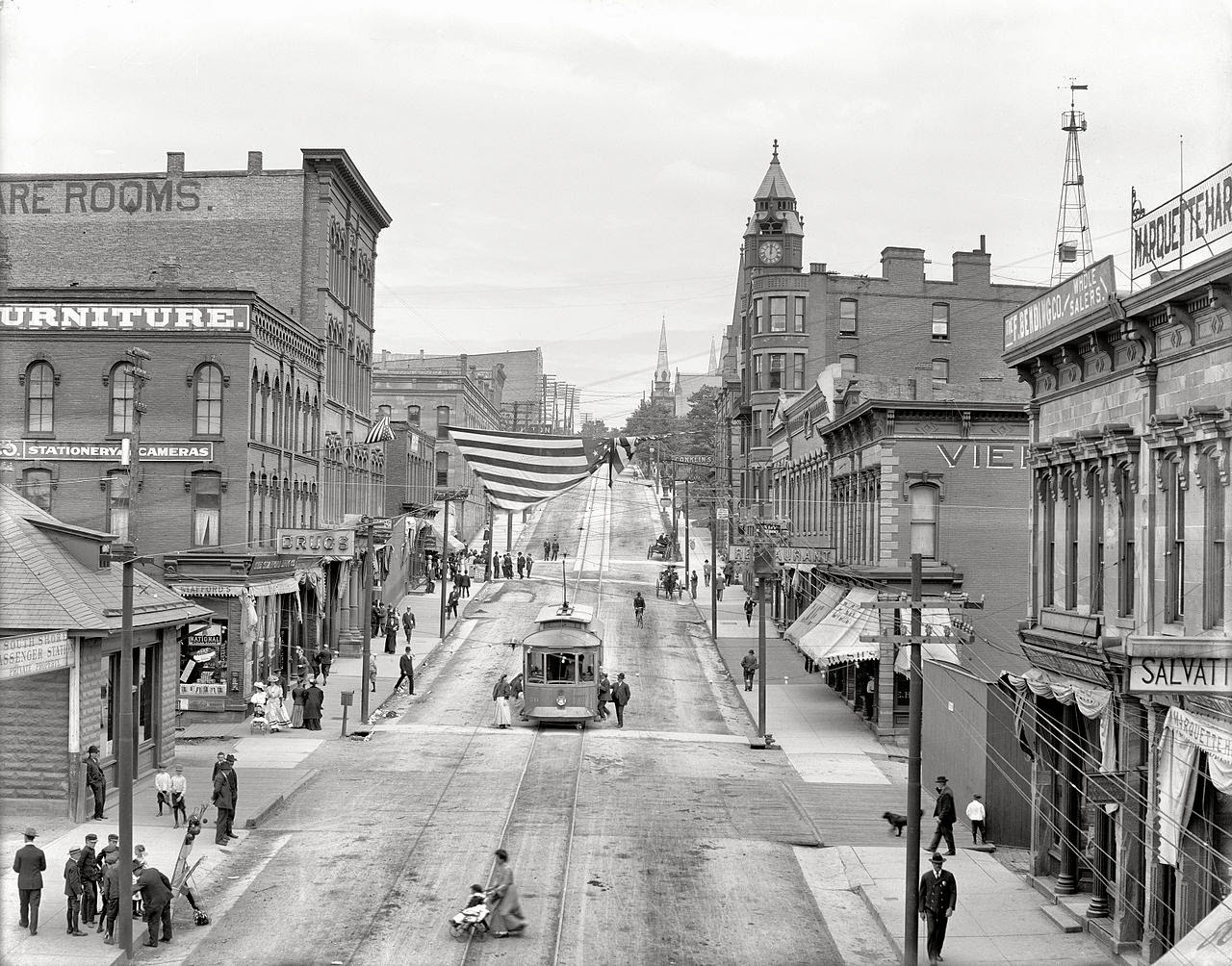
On this fine Sunday morning, I discovered a website that I’ve immediately fallen in love with. It’s called Vintage Everyday, and its tagline reads “bring back nostalgia and memories”. And it does, oh if it does, although technically it’s not even nostalgia: most of us simply don’t remember those times because we just never lived in them. Still, it’s an unbelievable collection that will keep you browsing for hours. It contains photos of times past: people dressed in the style of their time, billboards with traditional advertising, cities shaped in ways now alien. It’s mesmerizing, and in a different way from sites collecting pictures of actors and actresses from the Golden Age of Hollywood, such as the appropriately named Old Hollywood. Vintage Everyday is different because it collects images of everyday people and everyday places, not famous movie stars, and in a sense it shows the human side of history. A similar feeling can be had by browsing one’s…

Orwell vs. Huxley: two dystopian worlds, compared

In 2009 Stuart McMillen, famed Australian comic artist, published a drawn rendition of a short passage from Neil Postman’s Amusing Ourselves To Death. The passage compares the radically different worlds depicted by Orwell in his “1984” and by Aldous Huxley in his “Brave New World.” Both novels show an Earth whose inhabitants have been rendered helpless and brainwashed, and are considered the quintessential dystopian novels. The term Big Brother, after all, was coined by Orwell for his novel. Yet they depict a radically different approach to enslave humankind. I’ll leave you to the word of Postman and to the wonderful, if not a little spine-chilling, imagery of McMillen. What Orwell feared where those who would ban books. What Huxley feared was that there would be no reason to ban a book, for there would be no one would want to read one. Orwell feared those who would deprive us of…

Add money to your likes: Flattr’s microdonation system

Many social networks today employ the concept of “favoriting” items: images on Flickr, Instagram and 500px; songs on SoundCloud; videos on YouTube and Vimeo; tweets on Twitter; repositories on GitHub; and so on…. When you “favorite” or “like” something, you’re essentially telling the author that you’d like more of that. Yet, when it comes to creative endeavors, it’s money that makes the difference: not only it helps cover the costs of production, but it also frees up time to produce more. That’s why many of us resort to selling prints, crowdfunding and other ways of raising money. One of such other ways is Flattr. And it’s G-R-E-A-T. The idea behind the Sweden-based company is both simple and genius: instead of actively sending money to an author, which can be complex and, in some cases, awkward, you can prepay your Flattr account using pretty much any credit card (in addition to Paypal)…

Get rid of those apps in iTunes that you never sync anymore

If you’re like me, you’ve had an iPhone, iPod Touch and/or iPad for a few years now and have probably amassed a fairly big collection of apps, both free and paid. Until last year’s iOS 5, this meant having to keep a local copy of each and one of them on the computer you used to sync your iOS device. My “Mobile Applications” folder contains 924 items, weighing a whopping 18.78 GB. iTunes only lists 920 apps, so something is out of sync already. Obviously, I do not use that many apps. My iPhone 4 only has 163, and I could delete many of those as I don’t use them. My father’s iPad, which uses my Apple ID to get apps so that he doesn’t have to purchase the same ones I have already paid for, has about 250, most of them being games he tried once or twice and…

Italian luddites: the downfall of a country living in the past

If you were to describe my country, Italy, as a country fearful of change, you wouldn’t be too far off from the truth. If Italians could live under a bubble preventing time from passing, most of them would jump at the opportunity. I have come to the conclusion that most of my fellow countrymen are luddite by nature. Technology is seen as something to be feared, rather than embraced. Something new comes along, and people of all ages — including part of the youth — will complain that it’s unnecessarily complicated, that things worked just as fine before, and that “back then” nobody was forced to learn anything new. I have wondered why people think this way for a few years now, and I think I’ve come to the conclusion that it has to do with history. Even today, a hundred and fifty-one years after the unification of the country,…