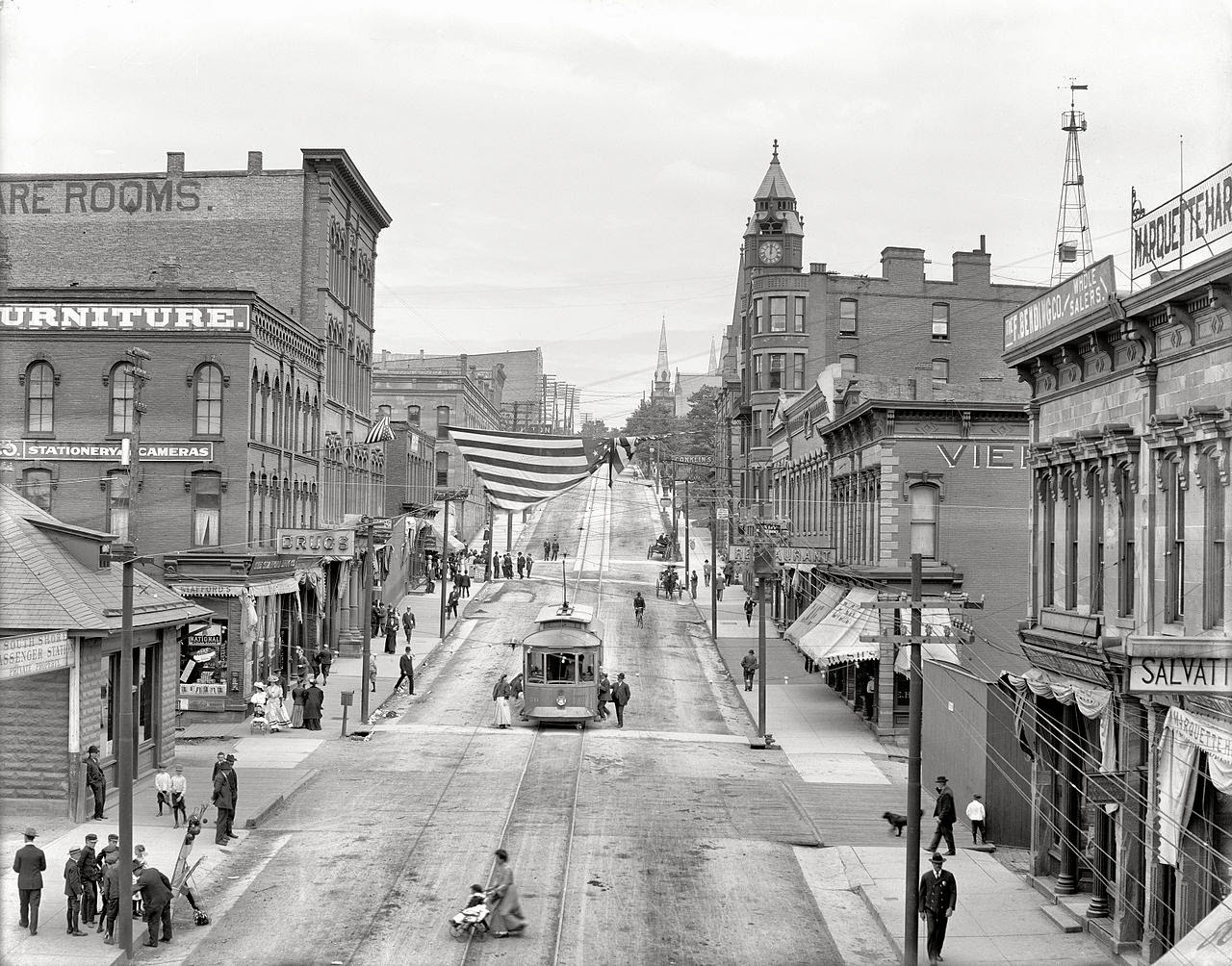
On this fine Sunday morning, I discovered a website that I’ve immediately fallen in love with. It’s called Vintage Everyday, and its tagline reads “bring back nostalgia and memories”. And it does, oh if it does, although technically it’s not even nostalgia: most of us simply don’t remember those times because we just never lived in them. Still, it’s an unbelievable collection that will keep you browsing for hours. It contains photos of times past: people dressed in the style of their time, billboards with traditional advertising, cities shaped in ways now alien. It’s mesmerizing, and in a different way from sites collecting pictures of actors and actresses from the Golden Age of Hollywood, such as the appropriately named Old Hollywood. Vintage Everyday is different because it collects images of everyday people and everyday places, not famous movie stars, and in a sense it shows the human side of history. A similar feeling can be had by browsing one’s…
Tag: time
In my last post, I wrote about the connections between language and thought, ie. linguistic relativity / determinism.
In today’s highly globalized world, languages get mixed and evolve at a much faster pace than ever before. English, for instance, is no longer only divided into British, American, Canadian and Australian English; we could say that there is a variety or dialect of English for any other natural language: Spanglish, Chinglish and so on. When French was the de-facto lingua franca of diplomacy (and, by extension, Western Europe), it was not substantially modified by other local languages; yet when English replaced it, after World War I and especially after World War II, it started changing immediately.
English, in particular its American variety, was not only originally used for international diplomacy; rather, as the United States rose a superpower in many fields (technology, business, etc.), one could argue that its language became widespread from the bottom. The average Joe in most other Western countries was exposed to American words: they wore blue jeans, they put coins into juke-boxes, they went to a bar. English words became commonplace over time, and this ultimately led to the creation of what could be easily considered a series of creoles that are, for the most part, mutually intelligible.